In public affairs men are often better pleased that the truth, though known to everybody, should be wrapped up under a decent cover than if it were exposed in open daylight to the eyes of all the world.
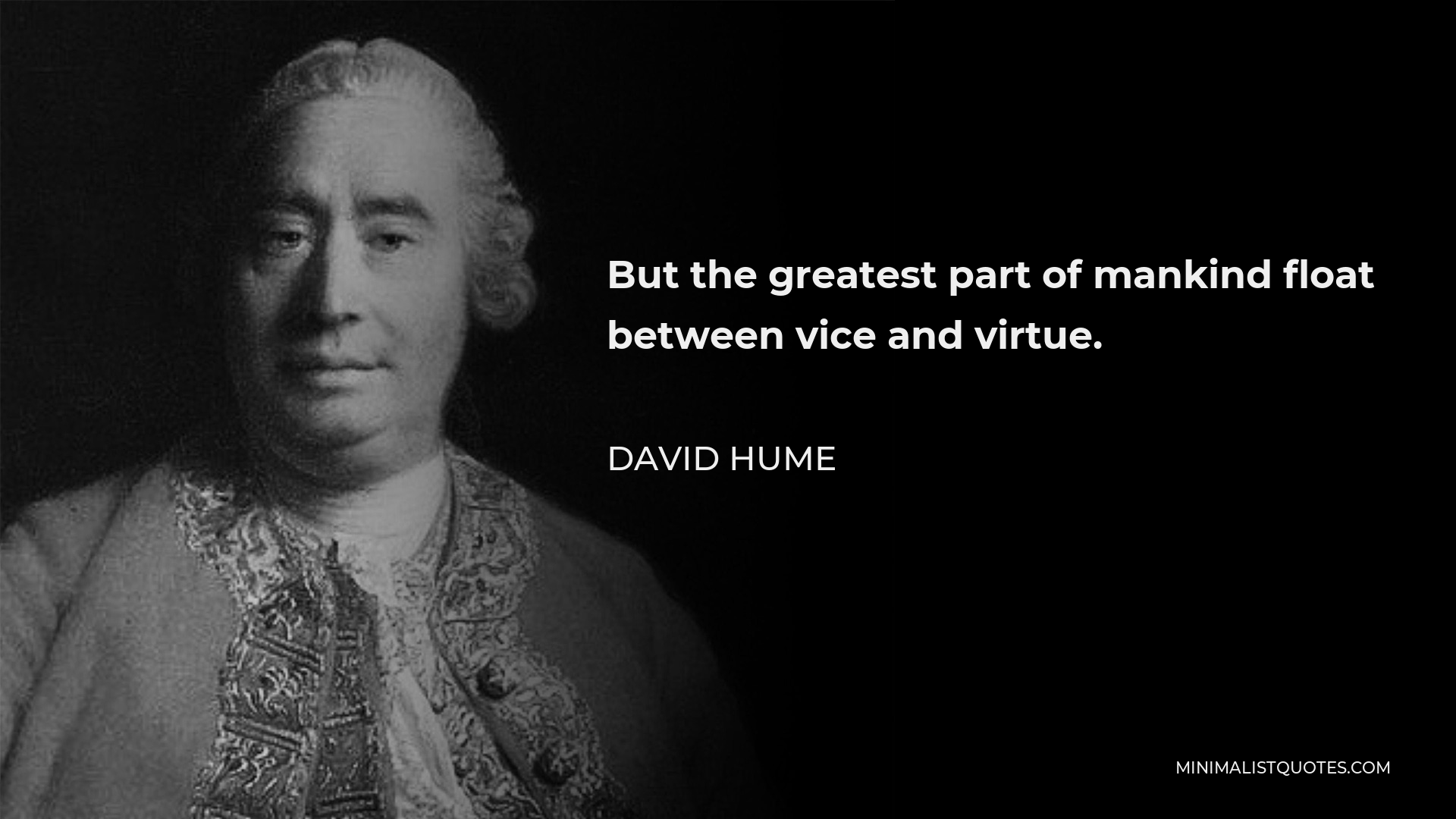
DAVID HUMEBut the greatest part of mankind float between vice and virtue.
More David Hume Quotes
-
-
It is an absurdity to believe that the Deity has human passions, and one of the lowest of human passions, a restless appetite for applause
DAVID HUME -
The Crusades – the most signal and most durable monument of human folly that has yet appeared in any age or nation.
DAVID HUME -
Reading and sauntering and lounging and dosing, which I call thinking, is my supreme Happiness.
DAVID HUME -
No man ever threw away life while it was worth keeping.
DAVID HUME -
I weigh the one miracle against the other and according to the superiority which I discover, I pronounce my decision.
DAVID HUME -
He is happy whose circumstances suit his temper, but he is more excellent who can suit his temper to his circumstance.
DAVID HUME -
Reason is, and ought only to be the slave of the passions, and can never pretend to any other office than to serve and obey them.
DAVID HUME -
It is, therefore, a just political maxim, that every man must be supposed a knave.
DAVID HUME -
A purpose, an intention, a design, strikes everywhere even the careless, the most stupid thinker.
DAVID HUME -
When men are most sure and arrogant they are commonly most mistaken, giving views to passion without that proper deliberation which alone can secure them from the grossest absurdities.
DAVID HUME -
Carelessness and in-attention alone can afford us any remedy. For this reason I rely entirely upon them.
DAVID HUME -
But the greatest part of mankind float between vice and virtue.
DAVID HUME -
But the life of a man is of no greater importance to the universe than that of an oyster.
DAVID HUME -
Revolutions of government cannot be effected by the mere force of argument and reasoning.
DAVID HUME -
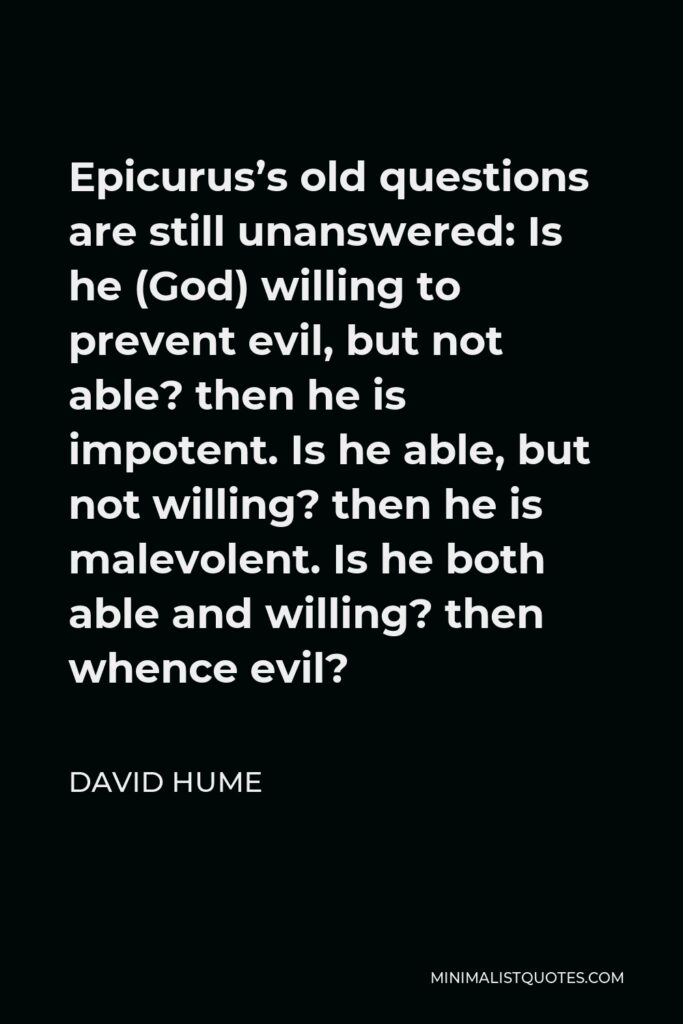
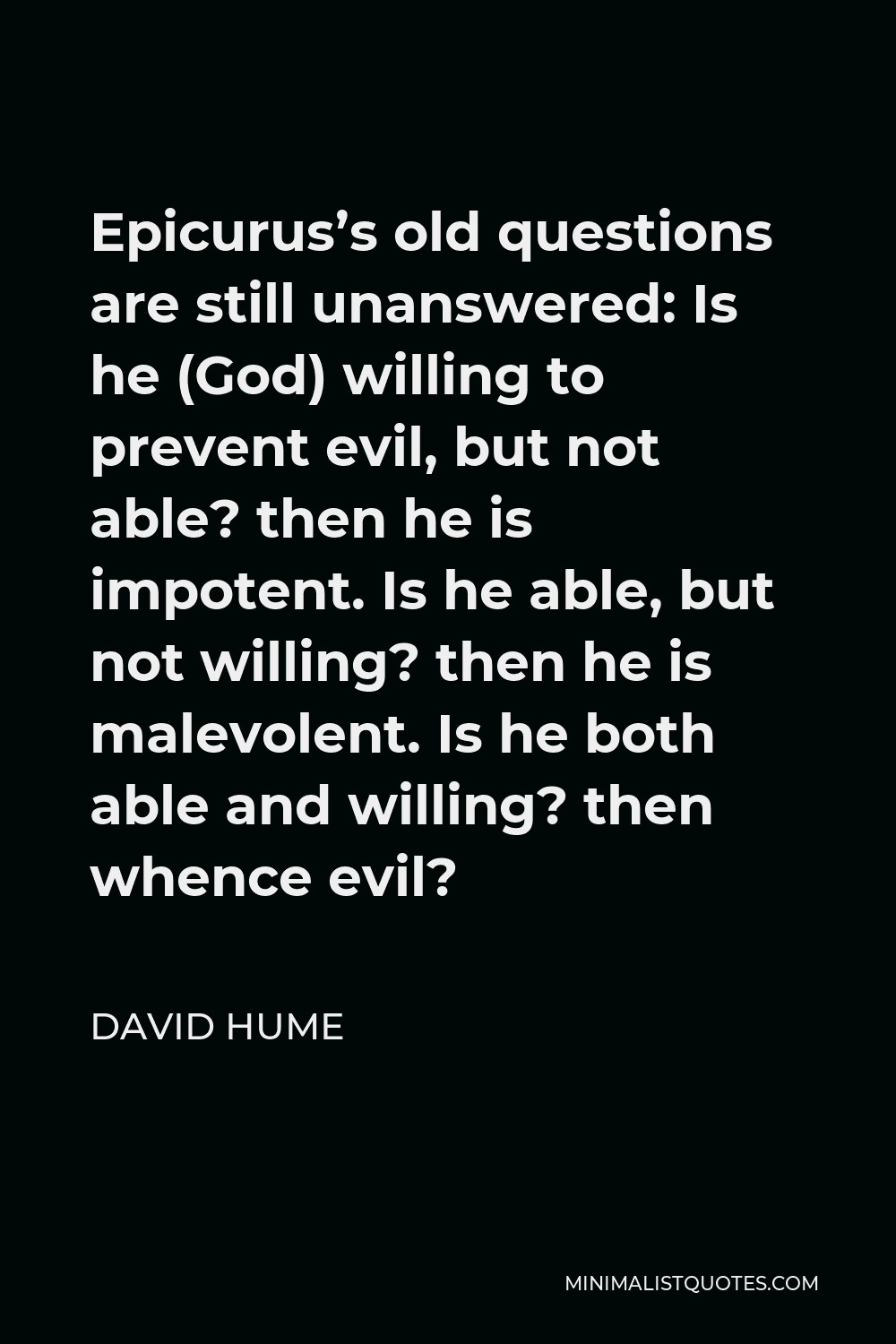
Epicurus’s old questions are still unanswered: Is he (God) willing to prevent evil, but not able? then he is impotent. Is he able, but not willing? then he is malevolent. Is he both able and willing? then whence evil?

DAVID HUME